
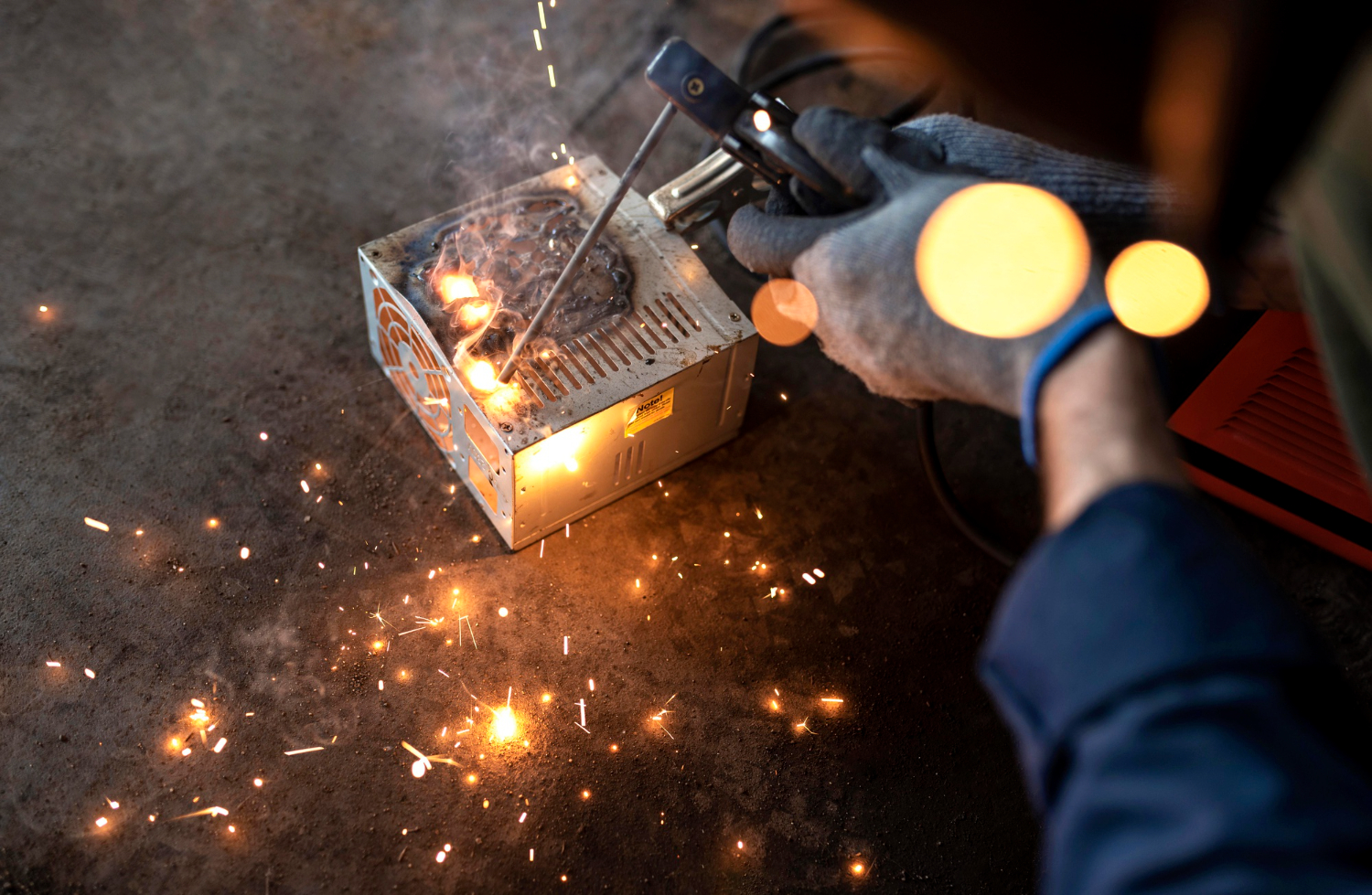
The industrial welding It is an essential technique in metal transformation and manufacturing processes. From the construction of structures to the manufacture of machinery components, This technique is one of the most essential tools for the sector. Nowadays, greater precision and resistance are needed in the processes, therefore, the benefits of industrial welding are increasingly valued by companies in many sectors.
In Metal Transformed ToralWe know that it is very important to apply advanced welding techniques to ensure the quality, durability, and customization of each project.
In this article we explain to you What are the main benefits of industrial welding? in metal manufacturing.
What is industrial welding?
Industrial welding is a process of joining metal parts by applying heat, pressure, or both, with or without the addition of a filler material. The difference with other methods such as screwing or riveting is that welding offers a structural fusion of the metal, which makes the joints more resistant and durable.
They exist various types welding applied in industry:
- MIG/MAG welding
- TIG
- By arch
- Laser
- By points
Each has its own specific advantages depending on the type of material, the thickness of the pieces, or the desired finish.
Strength and durability
One of the main benefits of industrial welding is the great structural resistance it has. Welded joints are an integral part of the material, allowing it to withstand mechanical stress, heavy loads, and harsh environmental conditions without compromising the integrity of the assembly.
This factor is very important in sectors such as construction, the automotive industry, the naval industry, and heavy machinery manufacturing, where structural strength and reliability are paramount to ensuring safety.
Versatility in materials and applications
Industrial welding can be adapted to many materials metallic materials, including steel, stainless steel, aluminum, copper, brass, and special alloys. Thanks to this versatility, can be applied in many projects, from the manufacture of metal structures to precision technical parts.
In addition, there are specific techniques for more delicate metals or those with demanding aesthetic requirements, which further expands its range of industrial applications.
Reduction of production times
Another of the most notable benefits of industrial welding is its ability to streamline manufacturing processes. Automated or semi-automated welding techniques join parts quickly and continuously, without the need for intermediate processes such as drilling or screw assembly.
This translates into a greater efficiency on the production line, which allows meeting tight deadlines and reducing costs, something key for industries that work on demand or with serial production.
Design optimization and customization
Thanks to industrial welding, it is possible to create custom designs without compromising the functionality or durability of the parts. Its precision and adaptability allow for the development of customized solutions for clients in sectors as diverse as food, automotive, energy, and architecture.
Savings on materials
With a good weld, no additional elements are needed such as screws, nuts, rivets, or cable ties. This reduces the number of components required, minimizes the overall weight of the final product, and simplifies its design.
In addition, the savings in materials are also reflected in the cost of transportation, storage and maintenance, making the manufacturing processes much more efficient. more sustainable and profitable in general.
Automation and quality control
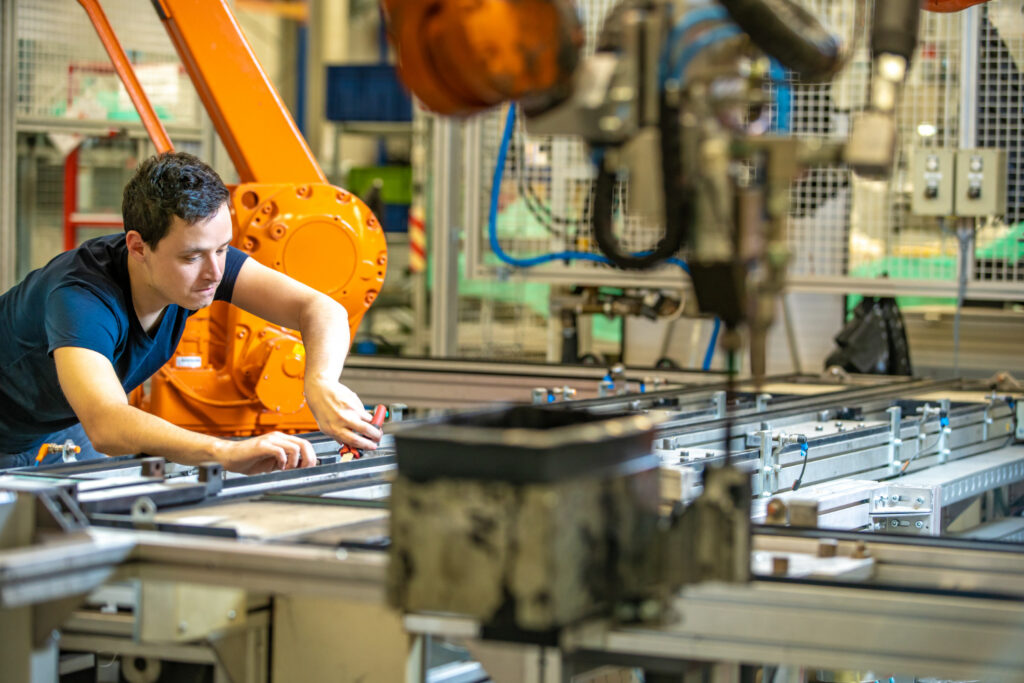
In the industrial environment, many industrial welding techniques can be integrated into automated processes using robots and systems. CNC, which guarantees greater precision, repeatability and quality controlThis is typically used in large-scale production or in environments where precise and consistent welds are required.
Automated control also allows for the detection of potential failures in real time, which reduces the margin of error and increases the reliability of the final product.
Improving the aesthetics of the final product
The evolution of welding techniques has made it possible to obtain not only functional results, but also aesthetically clean and uniform, especially in materials such as stainless steel or aluminum. This is highly valued in sectors such as architecture, industrial design, and metal furniture manufacturing, where the visual finish is important.
In Metal Transformed ToralWe apply the most advanced welding techniques to our metalworking projects, ensuring precise finishes and solutions tailored to each client's needs. If you're looking for a professional partner for your next project, don't hesitate to contact us.

 English (UK)
  Español
  Français
  Deutsch