

Mass production has revolutionized numerous industrial sectors, and the machining industry is no exception. What is serial production? This is a manufacturing method that allows you to create large quantities of parts with great precision and efficiency. In Metal Transformed Toral we are experts in mass production for both small and large production series and with deliveries to order or in Kanban.
What is serial production?
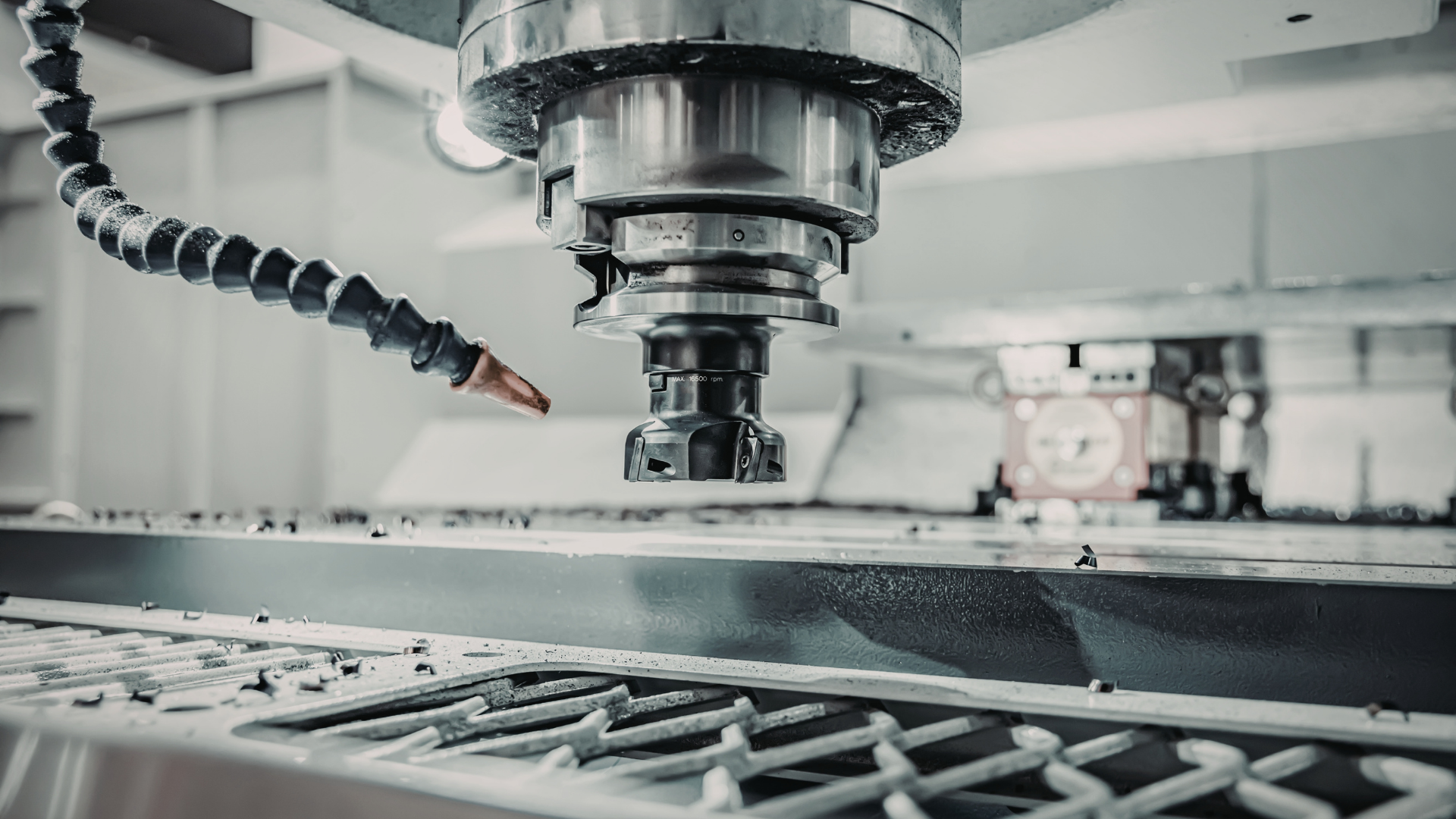
The serial production in the machining industry It consists of the mass manufacturing of parts and other components using automated techniques and standardized processes. For mass production, specialized machines are used such as lathes, milling machines, CNC machining centers and other tools. This is how companies can produce large volumes of parts identical efficiently and, furthermore, adjusting to the stipulated delivery times.
Serial production brings together the following characteristics:
- Standardization. Machining processes are standardized to ensure that each part produced meets necessary specifications.
- Automation. For mass production, automated machines are used, such as those that operate by Computer Numerical Control, which reduces the need for human intervention, while minimizing errors.
- Continuous production. Lines dedicated to serial production work continuously to maximize efficiency as well as production.
- QA. For mass production, very rigorous quality controls are implemented that guarantee that the pieces meet the required standards.

Operation of serial production in the machining industry
The serial production must follow a systematic process so that the parts can be mass produced and, as we already mentioned, delivered according to the established delivery times.
Design and prototype
The first step is the part design. To design a prototype, a CAD software, that is, computer-aided design. This process is done on external computers and, once the design is approved, a prototype is generated that allows the functionality of the part to be evaluated and adjustments made, if necessary.
Machine programming
With the design in hand, the CNC machine programming. For this, a CAM software or computer-aided manufacturing. During this stage of the process, the trajectories of the cutting tools, as well as the parameters of cutting speed, depth, feed, etc.
After using the CAM software, the machine is programmed using the alphanumeric language of the computer. Additionally, the necessary cutting tools are prepared and installed and the machine is calibrated.
Serial production
Once everything is ready, start the production of parts. CNC machines operate continuously and are capable of endure long hours of work. Furthermore, this type of machines manufacture parts with great precision and detail. In fact, one of the advantages of these machines is that operators do not need to be involved much in the process and can supervise more than one machine at a time.
Inspection and quality control
The pieces that are produced go through a rigorous quality control. To carry out this control, measurement tools and inspection techniques are used to verify that each piece meets the required specifications. Parts that pass quality control are packed and prepared for shipment or are prepared for later assembly.
Advantages of mass production
Why is mass production one of the most used techniques by different industries? Because it has multiple advantages. For example, it allows the manufacturing of parts with high accuracy and, furthermore, at a time pretty fast. That is why mass production is used in industries such as aeronautics, electronics, and the automotive and food sectors.
How the process is standardized and automatic, costs are reduced considerably, as are delivery times. And, of course, it is a process that maximizes operational efficiency, which increases production capacity.


 English (UK)
  Español
  Français
  Deutsch