
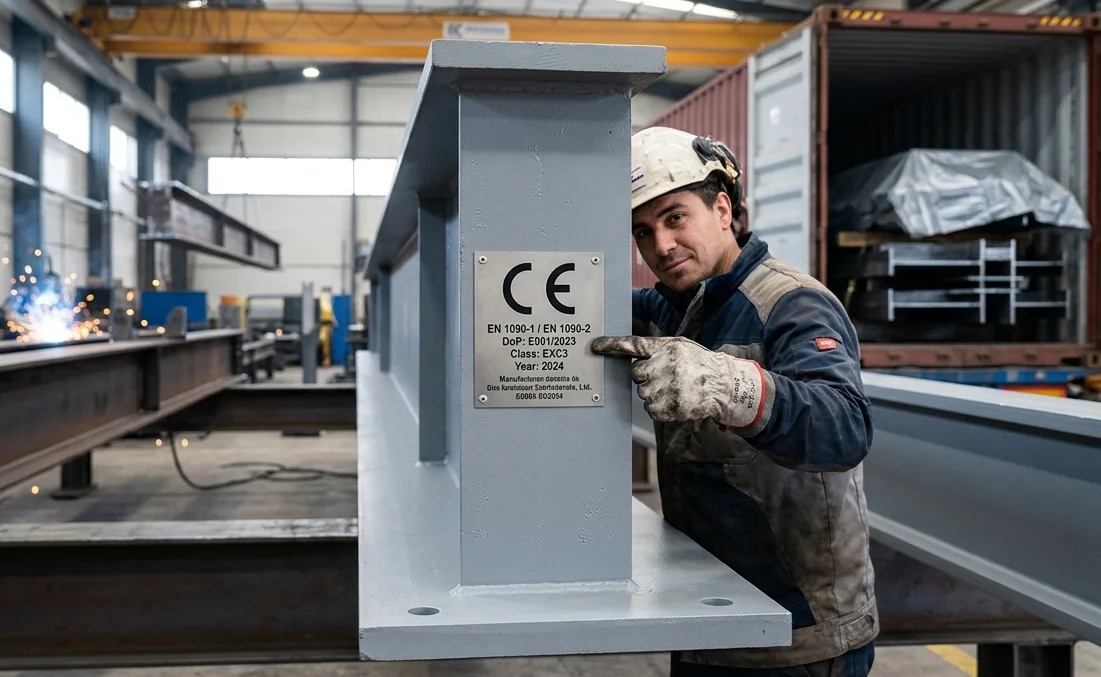
If your company manufactures metal components or structures and wants to expand into markets outside its usual environment, understanding the CE marking on metal structures It is fundamental. We are not talking about a simple trademark, but a technical and documentary requirement that can affect sales, customer acceptance of the product, and the ability to compete in certain markets.
In practice, many companies only discover the importance of CE marking when an international client requires it in a tender, a technical audit, or pre-supply approval. Therefore, it's essential to understand what it entails, when it actually applies, and what steps to take to ensure compliance. This article explains the key elements for correctly interpreting this requirement and preparing your company to export with greater confidence.
What is CE marking on metal structures?
The CE marking is a declaration by the manufacturer that a product complies with applicable European regulations and has been assessed according to the required standards. In the case of metal structures, it is usually linked to the Construction Products Regulation and, in particular, to the standard EN 1090, which regulates the execution of steel and aluminum structures.
This means that, where applicable, the manufacturer must demonstrate that a factory production control system is in place, that processes are defined, that materials are traceable, and that manufacturing follows verifiable technical criteria. It's not just about manufacturing well: it must be documented and proven.
Therefore, the CE marking on metal structures It affects both the final product and the company's internal organization. It involves procedures, records, controls, staff qualifications, welding management, and technical documentation associated with the supply.
When is it mandatory and why does it affect exports?
One of the most common mistakes is thinking that CE marking is required for any international export. In reality, its mandatory nature depends on the destination market and the type of product. It is especially relevant when the product is sold in the European Union or in environments where the customer requires compliance with European standards.
If a company wants to sell metal structures or components in the European market, not having the CE marking when required can block transactions, delay deliveries, or even cost it a business opportunity. Furthermore, although it is not a direct legal requirement in some countries outside the EU, it can serve as a signal of quality, reliability, and technical control.
From a business perspective, having this certification also enhances the manufacturer's image. A customer who sees that the company operates with controlled procedures, organized documentation, and regulatory compliance tends to perceive less risk. This can make all the difference in sectors where safety, traceability, and technical responsibility are crucial.
What does the EN 1090 standard require of the manufacturer
The EN 1090 standard does not simply require a final declaration. It mandates that the company has a system in place to guarantee production conformity. The most relevant aspects typically include the following:
Factory production control
The company must define and maintain an internal control system that ensures manufactured products always meet specified requirements. This includes work instructions, controls, records, and documentary evidence.
Materials traceability
The materials used must be properly identifiable. In metal structures, this is especially important to verify the origin, characteristics, and suitability of the steels, consumables, and other elements incorporated into the product.
Process and personnel qualification
When welding or other critical processes are involved, they must be performed by qualified personnel following validated procedures. The technical competence of the team cannot be informal; it must be supported by documentation.
Technical documentation and declaration of performance
The manufacturer must prepare the relevant documentation, maintain records, and issue the necessary declaration when applicable. Without this documentation, the CE marking is weakened and can lead to problems during audits, inspections, or claims.
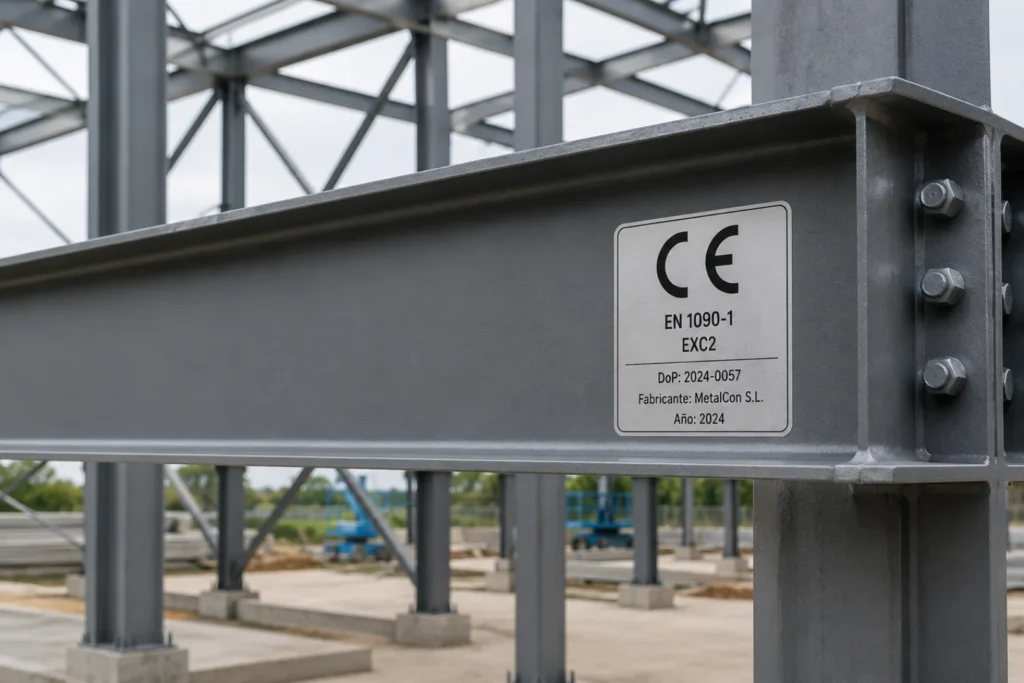
Real benefits for a company that wants to export
Although it may initially seem like a bureaucratic requirement, correctly implementing CE marking provides very clear operational and commercial advantages.
First, it helps standardize production. When processes are better defined, it's easier to reduce errors, improve repeatability, and detect problems before they reach the customer.
Secondly, it strengthens market confidence. For distributors, engineering firms, construction companies, and international buyers, working with a supplier that already meets European regulatory requirements reduces uncertainty and speeds up the homologation process.
Furthermore, it opens the door to more demanding projects. Many construction projects, tenders, and industrial contracts establish technical compliance criteria from the outset. If the company is already prepared, it can compete more effectively and respond more quickly.
Common mistakes to avoid
Many companies are approaching CE marking on metal structures Too late, when an order is already underway or when the customer requests urgent documentation. This reactive approach usually generates costs, haste, and a risk of non-compliance.
Some common mistakes are:
- Thinking that it is enough to put the stamp on without having implemented the documentary system.
- Not checking if the specific product actually falls within the regulatory scope.
- Neglecting the traceability of materials and processes.
- Failure to adequately train the staff involved.
- Relying on generic documentation models that do not reflect the actual operations of the company.
Avoiding these mistakes is key to ensuring the process doesn't become a burden, but rather a useful tool for orderly growth.
How to prepare to meet guarantees
If your company wants to export and suspects this requirement might affect its products, the most sensible course of action is to conduct a preliminary review. The first step is to confirm whether the manufactured structures or components fall within the relevant scope. From there, it's advisable to analyze the current state of documentation, manufacturing processes, traceability, and the technical qualifications of the team.
Next, the production control system must be implemented or adjusted in the factory, records organized, and deficiencies corrected before presenting to demanding clients or undergoing certification processes. Having specialized technical support at this stage often significantly accelerates the process and prevents costly errors.
He CE marking on metal structures It should not be seen as a mere formality for exporting, but as a foundation for compliance, trust, and competitiveness. When a company handles it well, it not only reduces regulatory risks but also improves its internal organization and projects greater credibility to the market.
If your goal is to sell in environments that demand technical compliance, being proactive is the best decision. Reviewing your processes, documentation, and the actual scope of your products now can help you export with greater confidence, credibility, and responsiveness.



 English (UK)
  Español
  Français
  Deutsch