
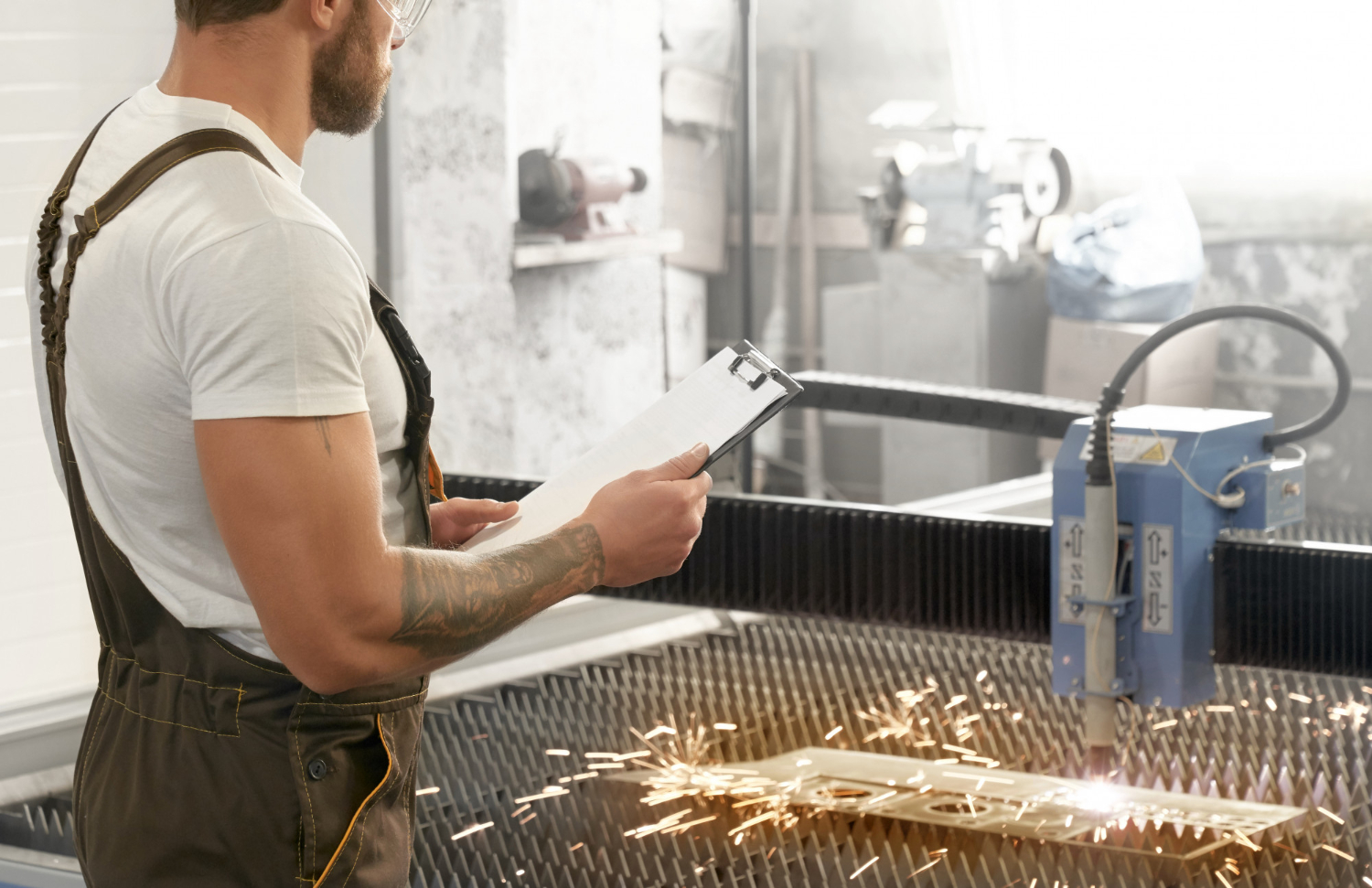
In this sector, Precision and cutting quality are key aspects that influence the final finish of any project. Choosing the perfect cutting technology improves the result, optimizes costs, and optimizes delivery times. In other words, a three-in-one. In this article, we'll tell you the main ones. differences between laser cutting and plasma cutting, two widely used techniques in industry, but with different characteristics and applications. Read on!
What is laser cutting?
Laser cutting is a technique that uses a concentrated beam of light to melt or vaporize the material, thus allowing very fine and precise cuts. This tool does not come into contact with the metal, resulting in wear-free operation and greater precision. The laser beam is directed by an automated system, ensuring a precise and precise laser beam. great accuracy even in more complicated designs.
This method is usually used in jobs that require high precision and flawless finish. It is widely used in sectors such as automotive, industrial machinery, or the manufacturing of detailed metal components. It is also good for thin materials, such as stainless steel, carbon steel or aluminum sheets, although some industrial laser machines also work with greater thicknesses.
The advantage? No additional processing is required, as the edge finish is usually very clean. Therefore, you do not work twice, but once.
What about plasma cutting?
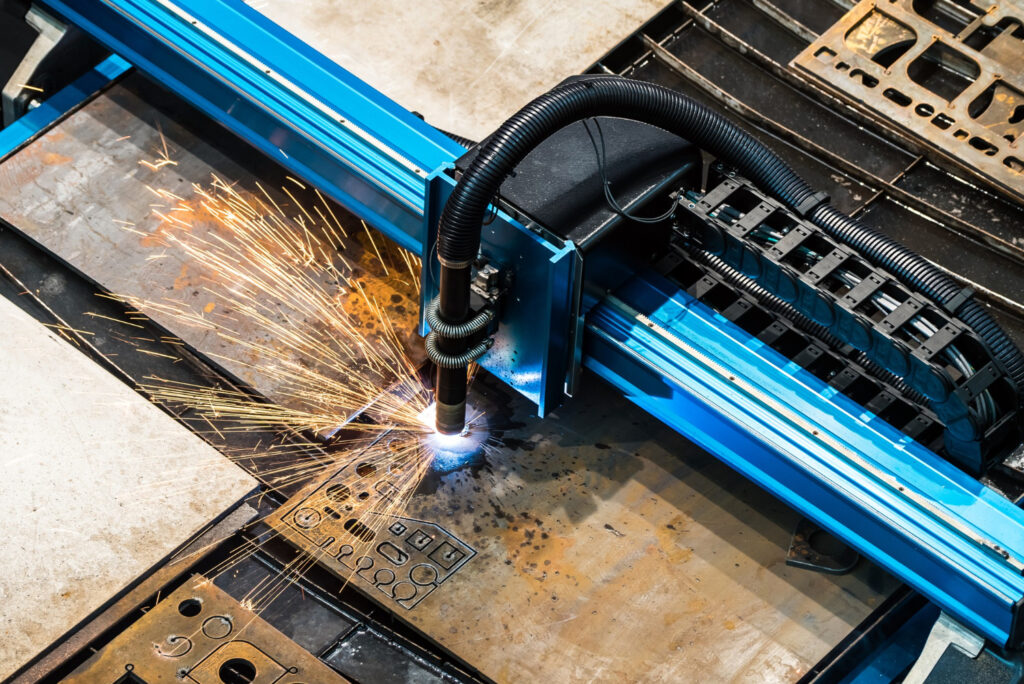
On the other hand, plasma cutting uses a jet of high-temperature ionized gas to melt the material. This gas is generated by an electrical discharge that creates what is known as "plasma," capable of reaching very high temperatures. When projected at such rapid speed onto the surface, the plasma cuts the metal.
This technique is used for cutting thicker materials or for applications where a perfect aesthetic finish is not required. In addition, is more tolerant with materials that may have rust, paint or impurities, which is why it is often used in industrial environments, metal construction or heavy machinery maintenance.
It is true that its precision is not as high as that of the laser, but it's faster in thicker materials ands cheaper, making it a cost-effective option for certain types of production.
Laser Cutting vs. Plasma Cutting: Key Differences
As you may have noticed, both methods have their advantages, and choosing one or the other will depend on the type of project you are working on. laser cutting It stands out for its precision, his quality of finish and his ccapacity to make more complicated cuts in more detail. Instead, the plasma cutting It is more fast, has better performance in thick materials and is cheaper.
He laser It is more effective in jobs where you want the clean edges, fine details or specific geometries. On the other hand, the plasma best suited to large structures, support pieces or jobs in which cutting speed and strength are the priority and not the finish.
It's also important to consider the type of material and its condition. Laser cutting can be affected by surface impurities, while plasma cutting can work with oxidized or painted metals without much difficulty.
Practical applications in different contexts
In industrial environments, these technologies are complementaryIn many workshops and production centers, both systems are used depending on the type of order. If possible. The same project may require laser cutting for precision interior parts and plasma cutting for external structural components.
In addition, certain factors such as the number of parts to be manufactured, the available budget, and delivery times also influence the choice. In mass production, laser cutting is perfect for maintaining quality. However, for single pieces or small batches of thick parts, plasma cutting can be more cost-effective and faster.
Both laser cutting and plasma cutting are effective technologies for metalworking, but each has its own needs.
Now that you know the differences between the two methods, you will be able to make better decisions When planning a project or ordering metal production, choosing the right technique not only improves the quality of the final product but also helps optimize resources and timescales.
Looking for a metal cutting service for your project? In Metal Transformed Toral We adapt to the needs of each client. Whether for the mass production or for custom projects, we can help you find the most suitable technical solution. Take a look at our services!


 English (UK)
  Español
  Français
  Deutsch