

In Toral We take care of the highest quality metal processing. In the machining sector, precision and efficiency are essential to ensure high quality products and reduce operating costs. To achieve these objectives, it is possible to resort to advanced technologies, such as CAD-CAM software. What is CAD-CAM software? What are they used for? How can they improve efficiency and productivity? We'll tell you in this article!
What is CAD-CAM software?
The first thing we must tell you is that, when we talk about CAD-CAM software, we are referring to two different programs, but One cannot function without the other. This type of software is used for the CNC manufacturing, because it is used by the Machine tools that operate by computer numerical control.
What is CAD software?
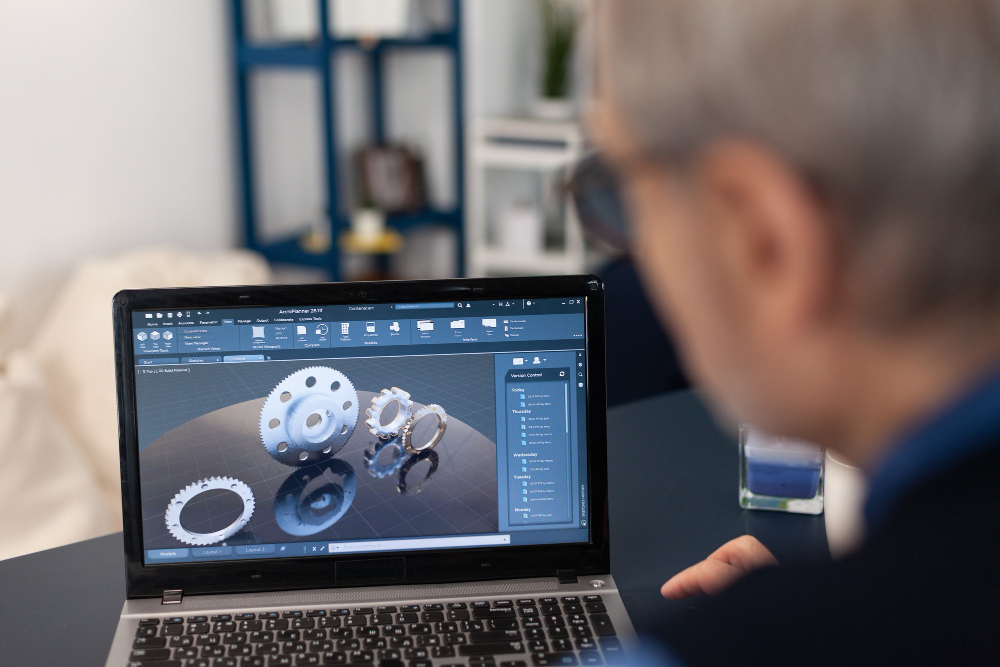
The main function of a CAD software is the design. In fact, CAD stands for Computer Aided Design (or computer). This software is used to create 2D or 3D models of parts or products that will later be manufactured, that is, brought to the real plane. CAD programs They allow designers and engineers to visualize their ideas in great detail, make adjustments and optimize designs before moving to manufacturing.
By providing detailed visual representationsThese software programs minimize design errors and ensure that the final piece meets the specifications required for each project.
What is CAM software?
On the other hand, the CAM software is in charge of the manufacture.CAM stands for “Computer Aided Manufacturing” and its main function is Translate designs created in CAD to specific instructions for the cnc machines which will be responsible for carrying out the machining work. The CAM software generates G and M codes, which tell machine tools how and where to cut, drill or shape the material to produce the designed part.
How do CAD-CAM software work?
The CAD and CAM integration allows fluidity in the design and manufacturing processes. To begin with, the design of a piece is done using CAD software, where the relevant adjustments can be made. Once the design has been approved, this imported into CAM software, which is responsible for generate machining instructions translating them into the alphanumeric language used by CNC machines.
This combination allows projects to move from design phase to production phase, quickly and accurately. Once the CAM has generated the instructions for the machine tool in question, the operator only needs to enter these parameters into the computer of the machine in order to start production. Logically, it is necessary to position the piece and the cutting tools specific to each machining.
Benefits of using CAD-CAM software in machining
Accuracy and error reduction
Thanks to the Using CAD-CAM software, it is possible to considerably reduce the human errors that occur when moving from design to production. This is because designs are transferred directly from the CAD to CAM program, which eliminates the need to manually interpret specifications.
Optimizing production times
The process automation allows companies to reduce time necessary to move from the design phase to the production phase. This is very important in those projects that require the high volume manufacturing of parts, that is to say, mass production, or who have tight deadlines.
Cost reduction
The combination of CAD and CAM allows optimize the use of materials and reduce waste, which undoubtedly reduces production costs. In addition, savings in manufacturing times also mean lower operating costs, benefiting the company and its profitability. Keep in mind that thanks to the CNC machining, the same operator can work simultaneously with several machine tools that use this technology.
Modifications and adjustments
With the CAD-CAM software, make adjustments to the design of the parts or to the manufacturing process It's much easier. If necessary change a measure, a cutting angle and even a material, operators and engineers can make these adjustments directly on the program, without having to start from scratch.
In addition, before carrying out the manufacturing of the piece, the software allows to perform simulations in order to evaluate the project viability and detect possible faults. This, without a doubt, allows the created pieces to have the required standards, avoiding costly long-term losses.


 English (UK)
  Español
  Français
  Deutsch